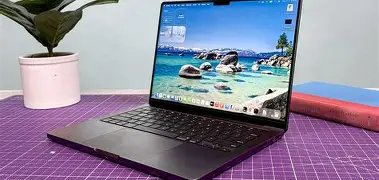
Which is Better Value? M5 MacBook Pro vs M4 MacBook Pro Compared
When Apple releases a new generation of MacBook Pro, buyers face a familiar dilemma: pay a premium for the newer model or save money on the previous generation and still get excellent capability. This comparison looks at the M5 MacBook Pro and the M4 MacBook Pro from the perspective of real-world use, value over time, and the priorities most buyers bring to the decision. Rather than focusing on raw benchmark numbers, the article examines practical differences—performance for typical workloads, battery life and thermals during sustained tasks, upgrade and configuration choices, and resale/value considerations—so readers can decide which model delivers the best value for their needs.
Quick takeaways
Short version: The M5 MacBook Pro represents an evolutionary improvement that shines for sustained heavy workloads, high-end creative work, and buyers who plan to keep their machine for many years. The M4 MacBook Pro remains a strong value, especially when discounted—ideal for students, general productivity users, and anyone whose workflows are not consistently CPU/GPU-bound.
How to read this comparison
This comparison treats value as more than initial price: it includes usability, daily experience, potential savings from buying the previous generation, and longevity. Key buyer questions addressed: Will the M5 speed up the tasks you do most often? Will it extend battery life or allow quieter operation under load? Is the price difference worth the upgrade if one primarily uses web, office, or light creative apps?
Design and build
Both models keep Apple’s premium build quality—aluminum unibody construction, refined trackpad, responsive keyboard, and high-quality speakers. Physically, differences between the two generations are typically subtle. Buyers should expect similar chassis strength and fit-and-finish. Where the newer model often differentiates itself is in thermals and internal layout: silicon improvements in the M5 generation frequently allow for better power management and, in some configurations, quieter fans or lower sustained temperatures during heavy use.
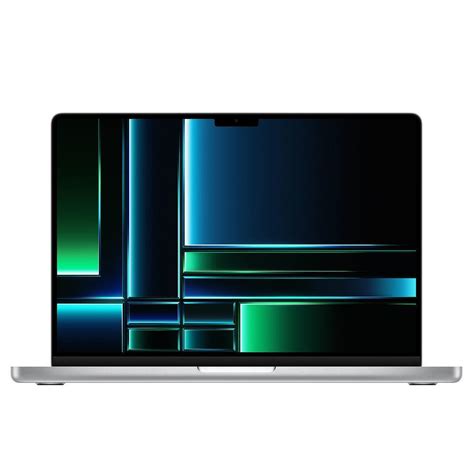
Port and connectivity expectations
Port counts and types can influence value more than raw performance for many buyers. For users who attach multiple monitors, external drives, or legacy peripherals, having the necessary ports on the laptop without relying on dongles is a convenience that affects daily productivity. Historically, Apple’s port choices have varied little across consecutive full-size Pro generations; however, small changes—such as upgraded Thunderbolt versions or improved wireless chipsets—can matter depending on peripheral needs.
Performance: everyday to professional workloads
Apple’s generational silicon improvements tend to focus on three areas: single-thread responsiveness, multi-threaded throughput, and specialized hardware (media engines and neural processors). The M5 MacBook Pro generally offers improvement across those areas when compared to the M4. In practice, this translates to:
- Quicker app launches and snappier UI interactions for both models, with the M5 feeling marginally more immediate under heavy multitasking.
- Faster completion of CPU-bound batch tasks (large file exports, code compilation, data processing) on the M5, with the difference growing for sustained jobs that tax thermal headroom.
- Notable advantages for content creators on the M5 if Apple has expanded or accelerated the media engine and GPU capabilities—this means faster video exports, smoother timelines with more effects, and better handling of high-resolution footage.
For many office and web-focused users, the M4 remains more than capable and often indistinguishable from the M5 in daily browsing, email, and document editing.
Sustained workloads and thermals
Where generational gains are most visible is in sustained workloads. If a user often renders video, exports large photo libraries, or runs heavy simulation or compilation workloads for extended periods, the M5’s architectural optimizations and potential thermal improvements can result in higher sustained throughput and less throttling. That affects the time it takes to complete long tasks and the overall comfort of using the laptop (fan noise, surface temperature).
Battery life and efficiency
Efficiency improvements are a hallmark of Apple silicon. The M5 typically delivers incremental gains in battery life, particularly in mixed-use scenarios and when hardware encoders/decoders are employed for media tasks. For people who travel frequently or work long days away from power, small percentage improvements can translate to an extra hour or two of productive time—valuable for those who rely on the laptop for critical work.
Looking for the best Electronics deals on Amazon?
Browse Now →Display, audio, and daily experience
Both the M4 and M5 MacBook Pro models are expected to include Apple’s high-quality displays with excellent color reproduction, high brightness, and support for wide color gamuts—features that matter to photographers and video editors. Improved display controllers on newer silicon can slightly reduce power draw or allow higher sustained brightness without sacrificing battery life.
Speakers, webcams, and microphones are design elements Apple tends to refine gradually. Buyers who use their laptop for calls, remote teaching, or content creation should consider these features, but they typically do not justify selecting the newest generation on their own unless combined with performance or battery benefits.
Software compatibility and ecosystem
Both models run macOS and the vast majority of apps natively on Apple silicon. The M5’s newer neural and media hardware may unlock improved performance for apps that add optimization—machine learning features in photo/video applications, faster noise reduction, or enhanced real-time effects. For software developers targeting cross-platform or containerized environments, the general trend is that each new Apple silicon generation continues to improve compatibility and performance of native toolchains.
Real-world use cases
People choose MacBook Pros for different reasons. Below are typical buyer personas and how each model maps to those needs.
Everyday productivity and students
For students and users who primarily use office suites, web apps, video streaming, and light photo editing, the M4 offers excellent performance and battery life. Discounts and educational pricing can make the M4 an especially attractive value proposition.
Software developers and engineers
Developers who compile code frequently, run local containers, or maintain large projects may appreciate the M5’s improved multi-core performance and thermal stability. The M4 remains a solid choice for most development tasks, particularly if the project workload is intermittent rather than sustained.
Creative professionals (photo, video, audio)
Content creators see the clearest real-world difference from generational upgrades. If the M5 increases GPU capability or the media engine throughput, editing high-resolution footage, applying effects, and exporting timelines will be faster. For professionals on client deadlines, the time savings and improved responsiveness can justify the extra cost.
Scientific computing and machine learning
Researchers and data scientists who rely on on-device model training or data processing can benefit from any improvements to neural processors and memory bandwidth. If workflows are GPU-accelerated or use Apple’s ML frameworks extensively, the M5 is more future-proof.
Looking for the best Electronics deals on Amazon?
See Deals →Pros & Cons
M5 MacBook Pro — Pros
- Better sustained performance: Improved throughput for prolonged workloads and reduced throttling under heavy use.
- Enhanced media and ML capabilities: Faster video encoding/decoding and improved machine learning performance for apps that take advantage of them.
- Potential battery and efficiency gains: Longer real-world battery life for mixed workloads.
- Greater future-proofing: Newer silicon receives longer software optimization and driver support over time.
M5 MacBook Pro — Cons
- Higher price: New generation taxed at launch pricing, which may be a significant premium over the previous model.
- Marginal gains for light users: For general web and office tasks, the performance difference may not justify the cost.
- Potential limited availability of specific configurations: Higher-end configurations cost more; buyers must balance spec needs against budget.
M4 MacBook Pro — Pros
- Strong value when discounted: Apple and retailers often discount the previous generation at launch of a new model.
- Excellent everyday performance: More than adequate for most users, including moderate creative workloads.
- Proven platform: Stable software support and well-understood thermal/real-world behavior.
M4 MacBook Pro — Cons
- Less headroom for heavy sustained tasks: May throttle earlier under extended workloads compared with the M5.
- Shorter update horizon: Receives major platform optimizations for fewer years than the newest model.
- Potentially lower resale value: Older generation depreciates faster at first.
Comparison table
| Feature | M5 MacBook Pro | M4 MacBook Pro |
|---|---|---|
| Positioning | Newer generation; focused on efficiency and higher sustained performance | Previous generation; strong baseline performance and value |
| Performance | Improved single- and multi-thread performance and optimized media/ML hardware | High performance for most tasks but less headroom for sustained heavy workloads |
| Battery & Efficiency | Likely better mixed-use battery life due to silicon efficiency gains | Excellent battery life; slightly lower under identical heavy workloads |
| Thermals | Better sustained thermals in common configurations | Good thermals but more likely to throttle under prolonged max load |
| Ports & Connectivity | Similar physical ports; may include updated Thunderbolt/wireless versions | Solid set of ports typical for a Pro laptop of its release window |
| Ideal user | Professionals with sustained workloads, creatives, long-term buyers | Students, general users, and budget-conscious professionals |
| Value strategy | Pay premium for longevity and raw task throughput | Buy on discount to maximize performance-per-dollar |
Buying guide: How to choose between the M5 and M4
Choosing the right MacBook Pro depends on the buyer’s primary tasks, budget, and preferences for longevity versus immediate savings. Use the checklist below to decide:
- Identify core tasks: If most work involves web browsing, document editing, streaming, and occasional photo edits, the M4 is often sufficient. If frequent video exports, heavy image processing, ML tasks, or long build jobs are common, prefer the M5.
- Consider longevity: Buyers who plan to keep the laptop for five years or more may find the M5’s extended optimization window and thermal improvements worth the extra cost.
- Weigh total cost of ownership: Look beyond sticker price—consider storage/ram needs, potential external drives, dongles, and warranty or AppleCare costs. A higher initial investment in the right configuration can avoid painful upgrades later.
- Memory and storage configuration: Unified memory and fast internal storage significantly affect real-world performance in creative and technical workloads. Prioritize higher memory if using large datasets, VMs, or pro creative apps.
- Check discounts and trade-in opportunities: Launches drive discounts on previous models. If the M4 falls into a discounted price bracket that meets the above needs, it can be the better value.
- Assess thermal and acoustics needs: If a quiet workspace is essential, the M5’s improvements in efficiency may reduce fan usage during heavy tasks.
- Test the software stack: For niche software or plugins, verify compatibility and performance on the specific silicon generation. Some pro apps are optimized progressively for newer chips.
Configuration tips
When choosing specifications, prioritize unified memory (RAM) and storage based on workflow:
- 8–16 GB: Suitable for web, office, and light photo editing.
- 32 GB or more: Recommended for serious photo/video editing, large virtual machines, or heavy multitasking.
- Storage: Internal SSD speed matters for editing large files; choose a size that avoids frequent external workarounds.
- External displays and eGPUs: If connecting multiple high-resolution displays, confirm the port and GPU capabilities required for the desired setup.
Price and value over time
Value is the ratio of utility to cost over the ownership period. The M4’s value proposition improves significantly when a discount narrows the gap to the M5. The M5’s value comes from a longer update window and improved task throughput for heavy users. Buyers should estimate how long they will keep the machine, how often they perform heavy tasks, and whether the time saved by faster exports or builds justifies the upgrade cost.
Resale value is another factor: newer silicon usually retains higher resale value in the first few years. A buyer who plans to sell and upgrade regularly may recoup more of the M5 purchase relative to the M4.
Final recommendation
For most everyday users and students, the M4 MacBook Pro offers excellent performance and value—particularly when priced below the M5. It covers typical workflows comfortably and will likely remain capable for several years. For professionals whose productivity depends on faster exports, sustained rendering, or advanced machine learning tasks, the M5 is the better long-term investment; its efficiency and thermal gains translate into real time saved and a quieter, more capable machine under heavy load.
Ultimately, the best value depends on the buyer’s priorities. If budget sensitivity is paramount and workflows are moderate, choose the M4 when available at a discount. If future-proofing, maximum sustained performance, and slightly longer software optimization are critical, the M5 justifies the premium.
Conclusion
Both the M4 and M5 MacBook Pro models reflect Apple’s continued emphasis on performance and efficiency. The M4 remains compelling as a value buy for everyday and moderate pro use, while the M5 amplifies strengths that matter most to heavy users: sustained throughput, media and ML acceleration, and marginal battery gains. Buyers should evaluate how often their workflows push the laptop to its limits and whether the convenience of faster completion and a longer optimization window is worth the price difference. By aligning the choice with real-world needs—whether mobility, raw speed, or sheer cost-effectiveness—buyers can select the MacBook Pro that offers the best value for their situation.