Spec Battle: Dell Xps 14 2026 vs Logitech Mx Master 4 — Is It Worth Upgrading?
The tech landscape of 2026 has been defined by a singular pursuit: the seamless integration of high-performance localized artificial intelligence with the tactile precision required by power users. For professionals, creatives, and developers, two names consistently surface as the gold standard for portable productivity and ergonomic input. The Dell XPS 14 2026 represents the pinnacle of premium Windows ultrabooks, while the Logitech MX Master 4 stands as the long-awaited successor to the most celebrated productivity mouse in history. While one is a complete computing environment and the other is a peripheral, they are increasingly being viewed as two halves of a single high-end workstation. This year, both companies have pushed the boundaries of what users should expect from their primary tools.
In this editorial deep dive, we explore the engineering marvels and practical realities of these 2026 editions. We look at whether the XPS 14’s shift toward more aggressive NPU-driven performance justifies its premium price tag, and whether the MX Master 4 offers enough of a leap over the legendary MX Master 3S to warrant a spot on your desk. For the buyer standing at the crossroads of an upgrade cycle, understanding how these devices interact with the modern workflow—which is now heavily reliant on generative AI assistants and multi-layered multitasking—is crucial to making an informed investment.
The Laptop: Dell XPS 14 2026 — The AI Powerhouse
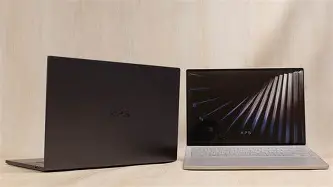
The 2026 iteration of the Dell XPS 14 is far more than a simple spec bump. It marks the third generation of Dell’s "Infinity" design language, characterized by the seamless glass haptic touchpad, the touch function row, and the lattice-less keyboard. However, the real story lies beneath the CNC-machined aluminum chassis. Powered by the latest neural-architecture-focused processors, this machine is designed to handle local LLMs (Large Language Models) and real-time video rendering without breaking a sweat or spinning up its fans to audible levels.
The display remains a crowning achievement. The 14.5-inch Tandem OLED panel provides a peak brightness that finally makes outdoor work viable, while the variable 120Hz refresh rate ensures that every movement feels fluid. Dell has also addressed the primary criticism of previous models by slightly increasing the travel of the keys and improving the thermal envelope, allowing the internal components to sustain peak clock speeds longer than the slightly cramped 13-inch sibling could ever manage.
Key Features of the XPS 14 2026
One of the most significant advancements in the 2026 model is the integration of high-bandwidth memory (HBM) modules directly adjacent to the processor. This reduces latency significantly, which is noticeable when switching between heavy applications like Adobe Creative Cloud and localized coding environments. The battery life, often the Achilles' heel of high-resolution laptops, has seen a 15% improvement due to the more efficient AI-managed power states that dynamically shut down unused silicon clusters in real-time.
From a connectivity standpoint, Dell remains committed to the future, offering three Thunderbolt 5 ports. While this necessitates the use of adapters for legacy hardware, the data transfer speeds and multi-monitor support are unparalleled. For the nomadic professional, the inclusion of a faster, more stable 5G module as a configuration option further cements the XPS 14 as the ultimate "go-anywhere" workstation.
The Peripheral: Logitech MX Master 4 — Precision Redefined
The Logitech MX Master series has long been the default choice for anyone who spends more than eight hours a day at a computer. The MX Master 4, arriving after a long period of refinement, focuses on three core pillars: silent tactile feedback, advanced sensor precision, and deeper software integration. While the silhouette remains familiar—retaining the ergonomic "wave" that supports the palm—the internal mechanics have been entirely overhauled.
The headline feature of the MX Master 4 is the new Darkfield 2.0 sensor, which now tracks up to 12,000 DPI. While such high sensitivity is usually reserved for gaming, its application here is for the ultra-high-resolution multi-monitor setups that have become standard in 2026. Micro-movements across a dual-8K display setup require this level of precision to avoid physical fatigue. Furthermore, the MagSpeed Electromagnetic scroll wheel has been tuned for even greater silence and a More distinct "ratchet" mode that feels more mechanical despite being entirely digital.
Innovations in Ergonomics and Connectivity
Logitech has introduced a variable-tilt mechanism in the MX Master 4, allowing users to slightly adjust the lateral angle of the mouse by up to 10 degrees. This subtle change allows for a more "handshake" grip, reducing ulnar deviation and the risk of carpal tunnel syndrome. Additionally, the side-thumb scroll wheel is now touch-sensitive, allowing for gesture-based "swiping" through timeline-based apps like DaVinci Resolve or large Excel spreadsheets without needing to click.
Discover deals on Laptops & Computers — updated daily.
See Deals →Connectivity has also moved to a low-latency proprietary protocol that mimics the speed of a wired connection while maintaining the convenience of Bluetooth. This "Bolt 2.0" technology ensures that even in environments crowded with wireless signals—like a coworking space or a busy office—the MX Master 4 never stutters. The battery life has been extended to 90 days on a single charge, and the USB-C fast charging now grants a full day of use from just sixty seconds of being plugged in.
Direct Comparison: Portability vs. Precision
Comparing a laptop to a mouse might seem like comparing a car to a steering wheel, but in the context of an "upgrade," they represent two different philosophies of improvement. Upgrading to the XPS 14 2026 is an upgrade of capability—it changes what you can do and where you can do it. Upgrading to the MX Master 4 is an upgrade of experience—it changes how you feel while doing the work you already do.
For the professional who is currently using a 2023 or 2024 laptop, the jump to the XPS 14 2026 will feel transformative due to the NPU capabilities. Tasks that used to be sent to the cloud, such as advanced photo masking or code suggestions, now happen instantly on-device. Conversely, if you are using an older MX Master 2 or 3, the MX Master 4 offers a cumulative improvement in comfort that may actually do more to prevent long-term repetitive strain injury than a new laptop would.
Technical Specifications Comparison
| Feature | Dell XPS 14 2026 | Logitech MX Master 4 |
|---|---|---|
| Primary Function | Full Computing Workstation | Precision Input Peripheral |
| Core Tech | AI-Engine Focused CPU/NPU | MagSpeed / Darkfield 2.0 Sensor |
| Interface | 14.5" Tandem OLED / Haptic Touchpad | 8 Custom Buttons / Dual Scroll Wheels |
| Connectivity | Thunderbolt 5, Wi-Fi 7, 5G | Logi Bolt 2.0, Bluetooth LE, USB-C |
| DPI / Resolution | 3.2K + Variable 120Hz | Up to 12,000 DPI |
| Battery Life | Up to 16 Hours (Actual Use) | Up to 90 Days |
| Key Value Prop | On-device AI and Portability | Ergonomic Comfort and Workflow Speed |
Pros and Cons: Dell XPS 14 2026
- Pros: Stunning Tandem OLED display provides the best visual experience in its class. The NPU facilitates incredibly fast local AI processing, enhancing privacy and speed. The thermal management is significantly improved over previous generations, resulting in a quieter machine. The haptic touchpad is precise and allows for a larger interaction area than traditional mechanical clicks.
- Cons: The price remains very high, entering the "luxury" tier of tech. The lack of USB-A or HDMI ports requires a lifestyle of dongles and adapters. The minimalist keyboard design, while beautiful, has a learning curve for touch typists used to traditional spacing. It can get warm during intensive AI training or 3D rendering sessions.
Pros and Cons: Logitech MX Master 4
- Pros: Unrivaled ergonomic design that supports the hand for long durations. The 12,000 DPI sensor works flawlessly on any surface, including glass. Quiet click buttons provide tactile feedback without the noise of a mechanical switch. Highly customizable software allows for app-specific profiles that significantly speed up workflows in Excel, Photoshop, and Final Cut.
- Cons: The size may be too large for users with smaller hands. It is primarily designed for right-handed users, leaving lefties without a comparable option. The premium price for a peripheral may be hard to justify for those who aren't power users. The rubberized coating, while comfortable, can show wear and oils over years of heavy use.
Real-World Use Cases: Which Upgrade Matters Most?
To determine if these upgrades are worth your money, we must look at who is using them. Consider the Software Developer. For this user, the Dell XPS 14 2026 is an essential upgrade. The ability to run local containerized environments and use AI-assisted coding tools without latency is a massive productivity gain. The increased RAM bandwidth means compiling complex projects takes seconds rather than minutes. For them, the laptop is the priority.
Alternatively, consider the Data Analyst or Digital Artist. These users often work at a fixed desk with multiple monitors. While they need a powerful computer, they might find that their current 2025 laptop is still "fast enough." However, their interaction with the data or the canvas is constant. For them, the MX Master 4 is the more impactful upgrade. The precision of the 12,000 DPI sensor and the comfort of the variable-tilt mechanism will have a more direct impact on their daily comfort and efficiency than a slightly faster processor would.
The Executive and Frequent Traveler represents a third category. This user values the XPS 14 for its 5G connectivity and all-day battery life. Being able to jump on a high-speed video call from a lounge without worrying about Wi-Fi or battery is the value. The MX Master 4, while great, is often too bulky for a slim laptop sleeve, making them choose the more compact MX Anywhere series instead. For this demographic, the laptop is the clear winner.

Buying Guide: Is It Worth It?
When deciding whether to pull the trigger on an upgrade in 2026, you should evaluate your current hardware based on the "Two-Generation Rule." Tech enthusiasts often want the latest every year, but for professional equipment, the most significant ROI (Return on Investment) occurs every two to three years.
You should upgrade to the Dell XPS 14 2026 if:
You are currently using a 2023 model or older. The leap in AI processing and the transition to Thunderbolt 5 are infrastructure changes that will define the next five years of computing. If your current laptop struggles with video calls while multitasking or if you find yourself tethered to a charger by midday, the efficiency of the 2026 model will feel like a revelation. Furthermore, if you are moving into workflows that utilize local generative AI, the NPU in this machine is non-negotiable.
Discover deals on Laptops & Computers — updated daily.
Browse Now →You should upgrade to the Logitech MX Master 4 if:
You are using an MX Master 2S or 3, or if you are using a standard office mouse. The ergonomics alone are worth the price of admission if you feel any wrist fatigue at the end of the day. If you have recently upgraded to a high-density 5K or 8K monitor, your old mouse likely lacks the sensor resolution to move smoothly across the screen. The MX Master 4 is a relatively inexpensive way to significantly "class up" your interaction with your computer, regardless of how old the computer itself is.
The Synergy: The 2026 Power Setup
While we have discussed these as separate entities, there is a reason they are often marketed alongside one another. The Dell XPS 14 2026 and the Logitech MX Master 4 represent a shared vision of the future: one that is quiet, incredibly fast, and ergonomically conscious. Dell’s software even includes "peripheral optimization" modes that recognize the MX Master series to adjust polling rates and power settings for the best wireless experience. Using them together creates a high-performance bubble that allows the user to disappear into their work.
The XPS 14 handles the "thinking" (the processing power, the AI, the visual output), and the MX Master 4 handles the "doing" (the navigation, the precision clicks, the tactile control). In an era where work is increasingly abstract and digital, having tools that feel substantial and reliable is a psychological advantage as much as a technical one.
Final Thoughts and Conclusion
The Dell XPS 14 2026 is a triumph of industrial design and engineering. It is a bold statement that the "ultraportable" no longer needs to compromise on heavy-duty processing power. By leaning into the AI-forward future, Dell has created a machine that feels ready for the challenges of 2027 and beyond. It is an expensive investment, but for those whose livelihood depends on the speed and reliability of their machine, it is currently the best 14-inch Windows laptop on the market.
The Logitech MX Master 4, on the other hand, is a masterclass in refinement. It doesn't reinvent the mouse because it doesn't need to; instead, it perfects it. By focusing on the health of the user through variable ergonomics and the needs of modern screen resolutions through its high-precision sensor, it remains the undisputed king of productivity peripherals. It is an "easy" upgrade—one that requires no data migration or software setup, yet provides instant gratification the moment you rest your hand on it.
Ultimately, the decision to upgrade depends on where your current workflow is bottlenecked. If your system is lagging under the weight of modern apps, the Dell XPS 14 is the answer. If your body is lagging under the repetitive stress of using subpar tools, the Logitech MX Master 4 should be your first priority. In a world where we spend the majority of our waking hours in front of these screens, investing in the quality of that experience is always worth it. Both of these products represent the current zenith of their respective categories, proving that in 2026, the battle for the "perfect spec" is won by those who prioritize the harmony between the human and the machine.