I Tested the Kobo Clara Colour for a Month: Here is My Verdict
The transition from traditional monochrome e-ink to color displays has been one of the most anticipated shifts in the digital reading industry. For years, readers have prioritized the high-contrast, paper-like quality of black-and-white displays for their ability to mimic the experience of a physical novel while remaining easy on the eyes. However, as the digital ecosystem expands to include graphic novels, high-resolution comic books, and nonfiction works heavy on charts and diagrams, the limitations of grayscale have become increasingly apparent. The Kobo Clara Colour represents a significant milestone in this evolution, bringing Kaleido 3 color technology to a compact, six-inch form factor that has long been a favorite for commuters and minimalist readers. After thirty days of rigorous daily use, it is clear that this device is not just a novelty; it is a tactical shift in how we consume diverse types of digital media.
The Evolution of the 6-Inch E-Reader
For most of the last decade, the six-inch screen has been the industry standard for portability. It fits comfortably in a coat pocket or a small purse, making it the ideal companion for transit or travel. When Kobo announced the Clara Colour, the primary concern was whether adding a color filter layer would compromise the crispness of the text—the "holy grail" of e-reading. The Kaleido 3 technology used here functions by placing a Color Filter Array (CFA) over a standard monochrome E Ink Carta 1300 layer. While the black-and-white resolution remains at a sharp 300 pixels per inch (PPI), the color resolution is effectively halved to 150 PPI. In practical application, this means that while text remains remarkably sharp, illustrations and book covers have a slight "newspaper" texture that feels retro yet functional.
During the first week of testing, the most immediate impact was observed in the library interface. Seeing book covers in full color rather than mud-toned grays fundamentally changes the browsing experience. It makes the device feel more like a physical bookshelf and less like a database of files. For readers who organize their digital collections by visual memory rather than title searches, this is a profound quality-of-life improvement. Beyond the aesthetics, the addition of color serves a functional purpose in navigation, highlighting, and note-taking that simply was not possible on previous iterations of the Clara line.
Daily Performance and Environmental Adaptability
The Kobo Clara Colour was tested across a variety of lighting environments: direct late-morning sunlight, fluorescent office lighting, and total darkness before sleep. One of the standout features of this model is the ComfortLight PRO system. In any color e-reader, the screen naturally appears slightly darker than a monochrome screen because the color filter prevents some light from reflecting off the bottom E Ink layer. To compensate, a slightly higher brightness setting is often required. Kobo’s implementation of adjustable brightness and blue-light reduction is excellent here. The ability to shift the screen from a cool white to a warm, candle-lit orange helps mask the slight dimness inherent in the Kaleido 3 panel.
Battery life remains a strong point, though it is slightly impacted compared to the monochrome Clara BW. In a month of testing—averaging about 45 minutes of reading per day with the front light set to 15% and Wi-Fi occasionally active—the device required only one full recharge near the end of the third week. This is impressive given the extra processing power required to render color and those slightly higher backlight requirements. The integration of a 2.0 GHz dual-core processor is evident when turning pages or opening large PDF files; the device feels snappy and responsive, with significantly less "ghosting" than earlier color e-ink models.
Case Study: Comics, Manga, and Graphic Novels
The real test of the Clara Colour lies in how it handles non-textual content. Reading a traditional superhero comic or a vibrant indie graphic novel on a six-inch screen is a polarizing experience. On one hand, the color reproduction is surprisingly nuanced. Subtle gradients in a sunset or the specific hues of a character’s costume are rendered with enough fidelity to remain immersive. On the other hand, a six-inch screen is objectively small for standard comic book layouts. Users will find themselves relying on the "pinch-to-zoom" gesture more often than they might on a larger tablet. However, for Japanese Manga, which is traditionally printed in a smaller dimensions, the Clara Colour feels almost perfect. Even though most manga is black and white, the ability to see the occasional color splash page or the original magazine cover art in its intended form adds a layer of authenticity to the experience.
Nonfiction readers also stand to benefit. During testing, several technical manuals and historical texts with maps were loaded onto the device. In a monochrome environment, a map with different colored territories often becomes a confusing mess of similar grays. On the Clara Colour, distinguishing between different regions or identifying specific lines on a complex graph becomes effortless. This makes the device a legitimate tool for students and professionals who need to carry reference material without the weight of a laptop or the eye strain of a traditional LCD tablet.
Sustainability and Build Quality
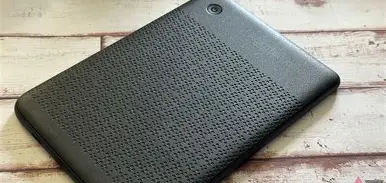
Kobo has made strides in environmental consciousness with this release. The Clara Colour is constructed using recycled and ocean-bound plastics. In hand, the device feels sturdy and well-manufactured. The back of the device features a textured, grippy surface that prevents it from slipping during long reading sessions. Perhaps the most significant "under-the-hood" improvement is the repairability. Kobo has partnered with specialized repair firms to ensure that components like the battery and screen can be replaced more easily than in previous generations. In a world of "disposable" electronics, this commitment to longevity is a breath of fresh air for the savvy consumer.
Looking for the best Laptops & Computers deals on Amazon?
See Deals →The device is also IPX8 rated, meaning it is waterproof for up to 60 minutes in two meters of water. This was tested during a rainy commute and a brief session near a pool; the capacitive touch screen remained responsive even with a few stray droplets on the surface, a common pain point for older e-readers that used infrared touch sensors.
Comparison of Specifications
To better understand where the Kobo Clara Colour sits in the current market, it is helpful to compare it to its closest siblings and competitors in the compact e-reader space.
| Feature | Kobo Clara Colour | Kobo Clara BW | Standard 7-inch Competitor |
|---|---|---|---|
| Display Tech | E Ink Kaleido 3 | E Ink Carta 1300 | E Ink Carta 1200 |
| Resolution (B&W) | 300 PPI | 300 PPI | 300 PPI |
| Resolution (Color) | 150 PPI | N/A | N/A |
| Storage Capacity | 16 GB | 16 GB | 8 GB / 32 GB |
| Waterproofing | IPX8 | IPX8 | IPX8 |
| Weight | 174g | 174g | 205g |
| Connectivity | USB-C, Dual-band Wi-Fi | USB-C, Dual-band Wi-Fi | USB-C, Wi-Fi |
Pros and Cons
The month-long testing period revealed several clear advantages and a few trade-offs that potential buyers should consider before making the switch from a traditional black-and-white device.
- Pro: Versatile Content Support – The ability to read color comics, annotated nonfiction, and children’s books on a single, portable device is a game changer.
- Pro: Enhanced Highlighting – Using different colors for highlighting (yellow, pink, blue, green) allows for much better organization of thoughts and study notes.
- Pro: Compact Portability – Unlike 10-inch color tablets, this device is truly pocketable and can be held comfortably with one hand for hours.
- Pro: OverDrive/Libby Integration – The built-in support for local library borrowing remains Kobo’s greatest software advantage, making it easy to access free content.
- Con: Slightly Dimmer Screen – Due to the color layer, the background is a darker gray than the "paper-white" of monochrome models, requiring more use of the front light.
- Con: Size Limits for Comics – While the color is great, the physical dimensions can make small text in complex comic panels difficult to read without zooming.
Buying Guide: Is Color Right for You?
Choosing an e-reader is no longer as simple as picking the one with the most storage. With the introduction of color, buyers must evaluate their specific reading habits to determine if the technology adds value to their routine. This section aims to categorize readers and provide a recommendation based on real-world testing data.
The Narrative Fiction Devotee
If your reading list consists almost entirely of novels, thrillers, and biographies with no illustrations, the Kobo Clara Colour might be an unnecessary upgrade. The primary benefit for this user is seeing book covers in color. However, because the screen is slightly less bright and has a subtle texture, the pure black-and-white reading experience is technically "cleaner" on the Clara BW. If you prioritize maximum contrast for text above all else, stick with monochrome.
The Visual Learner and Student
For those who frequently read PDFs, textbooks, or educational materials, the Clara Colour is highly recommended. The ability to color-code highlights is surprisingly effective for memory retention and organization. When you sync your notes to a computer later, seeing those distinct colors helps categorize information in a way that "shades of gray" never could. The portability also makes it an excellent secondary device for carrying heavy course packs without the bulk of a laptop.
The Comic and Manga Enthusiast
This is the primary target audience. If you enjoy digital comics but find reading them on an iPad or phone to be hard on your eyes, this device offers the middle ground. It provides the eye-comfort of e-ink with enough color to enjoy the artistry. Note that for large-scale "Epic" comics, you may eventually want to look at Kobo’s larger color offerings (like the Libra Colour), but for standard manga and casual comic reading, the Clara is perfectly adequate.
Discover deals on Laptops & Computers — updated daily.
Shop Amazon →The Eco-Conscious Tech User
If repairability and sustainable manufacturing are high on your list of priorities, Kobo is currently leading the pack in the e-reader market. The use of recycled plastics and the move toward a more modular internal design make the Clara Colour a responsible choice for someone looking to reduce their electronic waste footprint.
Software and Ecosystem Considerations
During the month of use, the Kobo software environment proved to be stable and user-friendly. One of the less-discussed benefits of the Kobo ecosystem is its openness. The device supports a wide range of file formats, including EPUB, PDF, FlePub, MOBI, and CBR/CBZ for comics. This flexibility is crucial for users who have purchased books from various retailers or have their own collections of DRM-free files. The integration with Pocket—a service that lets you save long-form web articles to read later—also benefits from the color screen, as web images and charts are preserved in their original hues.
The stylus support is notably absent on the Clara model (unlike the larger Libra), meaning that "color note-taking" is limited to highlighting with your finger and typing notes on the on-screen keyboard. For most users looking for a compact reader, this isn't a dealbreaker, but it is worth noting if you were hoping for a pocket-sized digital sketchbook. The typing experience on the six-inch screen is surprisingly decent, thanks to the improved processor, though it remains a secondary function compared to reading.
Final Verdict
After thirty days of use, the Kobo Clara Colour has proven itself to be a versatile and sturdy addition to the world of digital reading. It successfully bridges the gap between the traditional, focused reading experience of e-ink and the vibrant, multimedia-friendly nature of modern tablets. While the technology isn't without its caveats—specifically the slightly lower contrast and the halved resolution for color elements—the benefits of having color in such a portable frame are undeniable.
The device excels in its intended role: a highly portable, all-weather reader that handles almost any file type you throw at it. It makes your library feel more alive, your study habits more organized, and your morning commute more colorful. For the buyer who wants one device that can handle everything from a bleak noir novel to a vibrant travel guide or a colorful cookbook, the Kobo Clara Colour is the most balanced option currently on the market. It represents the point where color e-ink has finally moved from a specialized luxury to a practical, daily-driver reality for the average reader.