Biggest Netac Zx20 Ii Portable Ssd Buying Mistakes (And How to Avoid Them)
The transition from traditional spinning hard drives to solid-state storage was a revolution for laptop users, but the jump from standard internal SATA drives to high-performance external NVMe solutions like the Netac ZX20 II Portable SSD represents an equally profound shift. As modern laptops become thinner and provide fewer internal upgrade options, external storage has moved from being a secondary backup tool to an essential extension of a machine's primary workspace. However, the market for high-speed portable storage is fraught with technical nuances that can lead even experienced tech enthusiasts toward a disappointing purchase. The Netac ZX20 II, with its advertised speeds and compact form factor, sits at a price-to-performance sweet spot that attracts many, yet failing to understand its specific requirements can result in underperformance or compatibility headaches.
When purchasing a high-speed portable drive, consumers typically focus on the "headline numbers"—the maximum sequential read and write speeds. While these numbers are impressive for the Netac ZX20 II, they only tell part of the story. High-performance storage is part of an ecosystem that includes the laptop’s processor, the motherboard’s bus architecture, the specific USB standard of the port being used, and even the quality of the cable connecting the two. Neglecting any of these links in the chain is the most common path to buyer's remorse. This guide explores the engineering behind the ZX20 II and dissects the most common mistakes buyers make when integrating this powerful tool into their mobile workflow.
Understanding the Netac Zx20 Ii: A Technical Deep Dive
To avoid buying mistakes, one must first understand what the Netac ZX20 II actually is. It is an external SSD utilizing the USB 3.2 Gen 2x2 interface. This specific nomenclature is critical because the "2x2" signifies two lanes of 10 Gbps throughput, combining to offer a theoretical maximum of 20 Gbps. In real-world performance, this translates to sequential speeds that can reach up to 2,000 MB/s for reading and 1,800 MB/s for writing, depending on the capacity and the host system.
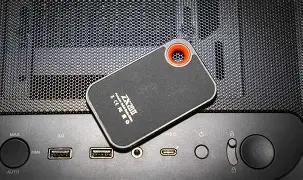
The drive itself is housed in a sleek, metallic casing designed for both thermal dissipation and portability. Unlike older portable SSDs that felt like bulky "bricks," the ZX20 II is roughly the size of a large USB flash drive but possesses the controller technology of a desktop-grade NVMe drive. This power-to-size ratio is achieved through the use of 3D NAND flash memory and a bridge controller that translates NVMe protocols into USB signals. However, because it packs so much performance into a small space, it behaves differently than a standard thumb drive. It draws more power, generates more heat during sustained transfers, and requires specific port configurations to hit its stride.
For laptop users, particularly those working in creative fields like 4K video editing, high-resolution photography, or 3D modeling, the ZX20 II offers the ability to work directly off the external drive. This "active workspace" use case is very different from "cold storage" (archiving files you rarely touch). When a drive is used as an active workspace, factors like IOPS (Input/Output Operations Per Second) and thermal throttling become much more important than the simple sequential speed printed on the box.
Mistake #1: Ignoring Port Compatibility and Throughput Limits
The single biggest mistake buyers make when purchasing a 2,000 MB/s drive like the Netac ZX20 II is assuming that any USB-C port on their laptop will deliver those speeds. USB-C is merely a physical connector shape; it does not guarantee a specific speed. Many mid-range laptops feature USB-C ports that are only rated for USB 3.2 Gen 1 (5 Gbps) or USB 3.2 Gen 2 (10 Gbps).
If you plug a USB 3.2 Gen 2x2 drive into a standard 10 Gbps USB-C port, the drive will "handshake" at the lower speed, effectively cutting your performance in half. Even more confusingly, many Thunderbolt 3 and some Thunderbolt 4 ports do not natively support the USB 3.2 Gen 2x2 "dual-lane" protocol. In many cases, a Thunderbolt 4 port will fallback to 10 Gbps when connected to a Gen 2x2 device, meaning you might see speeds of roughly 1,000 MB/s despite having a "faster" port. To avoid this mistake, you must verify that your laptop's specification sheet explicitly lists support for USB 3.2 Gen 2x2.
Mistake #2: Underestimating Thermal Management in Sustained Loads
Portable SSDs generate heat, and high-speed units like the ZX20 II generate significantly more than their predecessors. A common mistake is buying the drive for long, sustained data migrations—such as moving a 500GB game library or a 1TB video project—and then complaining when speeds drop after the first five minutes. This is known as thermal throttling.
The Netac ZX20 II uses its metal shell as a heatsink. During intense write operations, the controller inside will reach high temperatures. To protect the integrity of the data and the hardware, the controller will automatically reduce clock speeds, which slows down the data transfer. Buyers often mistake this for a "defective" drive, but it is actually a safety feature. To avoid this frustration, users should ensure the drive is placed on a flat, hard surface (not a bed or carpet) during use to allow for air circulation, or recognize that for extremely long sustained writes, a drive with an active cooling fan might be necessary—though much less portable.
Discover deals on Laptops & Computers — updated daily.
View Offers →Mistake #3: Neglecting the Importance of the Cable
It is tempting to use any old USB-C cable lying around from a phone charger or an older peripheral to connect the ZX20 II. This is a critical error. Many USB-C cables, especially those bundled with smartphones, are only wired for USB 2.0 speeds (480 Mbps) or are only meant for power delivery. Even a high-quality "fast charging" cable may lack the necessary high-speed data lanes required for 20 Gbps transfers.
The Netac ZX20 II comes with a specific cable designed to handle the 20 Gbps bandwidth. If you lose this cable or need a longer one, you must purchase a cable explicitly labeled as USB 3.2 Gen 2x2 or 20 Gbps certified. Using an inferior cable will immediately bottleneck the drive to a fraction of its intended performance, often leading the user to believe the SSD itself is underperforming.
Mistake #4: Overlooking File System Choice and OS Optimization
The way you format the drive can impact both its speed and its longevity. Many users leave the drive in its factory format (often exFAT for cross-platform compatibility). While exFAT is convenient if you move between Windows and macOS, it lacks the journaling features and metadata efficiency of NTFS (Windows) or APFS (Mac). For laptop users who primarily stay within one ecosystem, reformatting the drive to the native file system can lead to better small-file performance and improved reliability during unexpected disconnections.
Furthermore, Windows users often forget to enable "Better Performance" mode in the Device Manager for external drives. By default, Windows optimizes external drives for "Quick Removal," which disables write caching. While this prevents data loss if you accidentally unplug the drive without ejecting it, it significantly hampers write speeds. Enabling write caching allows the Netac ZX20 II to hit its maximum advertised write speeds, provided you remember to always "Safely Remove Hardware."
Analysis: Pros and Cons of the Netac Zx20 Ii
- Pro: Exceptional Speed-to-Price Ratio. Compared to many "big brand" competitors, Netac offers the 20 Gbps interface at a price point that is often closer to their competitors' 10 Gbps models.
- Pro: Ultra-Compact Build. The drive is significantly smaller than many NVMe enclosures, making it an ideal companion for thin-and-light ultrabooks where bag space is at a premium.
- Pro: Robust Metal Construction. The aluminum alloy housing provides essential physical protection and acts as a passive cooling element for the internal components.
- Pro: Broad Backward Compatibility. While it needs specific ports for max speed, it works reliably with older USB 3.0 and USB 2.0 ports using appropriate adapters or cables.
- Con: Heat Generation. Under heavy, continuous workloads, the casing can become quite warm to the touch, which might be off-putting for some users.
- Con: Extreme Dependency on Host Hardware. To see any benefit over cheaper 1,000 MB/s drives, the user must own a very specific (and relatively rare) subset of laptop hardware.
- Con: Cable Length. The included high-speed cable is often quite short to ensure signal integrity, which can be limiting for those using laptop stands or docks.
Comparison: Portable SSD Tiers for Laptop Users
To put the Netac ZX20 II in perspective, it is helpful to see how it sits within the broader landscape of external storage technologies currently available to laptop owners.
| Feature | Standard Portable SSD | Netac ZX20 II (Gen 2x2) | Thunderbolt 3/4 SSD |
|---|---|---|---|
| Interface | USB 3.2 Gen 2 | USB 3.2 Gen 2x2 | Thunderbolt / PCIe |
| Max Read Speed | Up to 1,050 MB/s | Up to 2,000 MB/s | Up to 2,800+ MB/s |
| Max Write Speed | Up to 1,000 MB/s | Up to 1,800 MB/s | Up to 2,500+ MB/s |
| Laptop Compatibility | Universal (USB-A/C) | Specific (Gen 2x2 USB-C) | Specific (Thunderbolt) |
| Best Use Case | General Backup / Photos | 4K Video / Large Games | Professional Workflow / OS Boot |
| Cost per GB | Lowest | Moderate | Highest |
Buying Guide: How to Ensure the Zx20 Ii is Right for You
Before proceeding with a purchase of the Netac ZX20 II, follow this step-by-step evaluation process to ensure you aren't making a costly mistake.
Step 1: Audit Your Laptop's Ports
Open your laptop's technical specifications. Look for the phrases "USB 3.2 Gen 2x2" or "20Gbps." If you see "USB 4," you are likely in the clear, as USB 4 typically includes support for the 20 Gbps dual-lane mode. If you only see "USB 3.2 Gen 1" or "Gen 2," you will not be able to utilize the full speed of the ZX20 II. In that case, you might consider if the extra cost is worth it for "future-proofing" or if a cheaper 10 Gbps drive would serve you just as well today.
Step 2: Identify Your Primary Data Payload
What are you moving? If you are moving thousands of tiny files (like a folder of word documents or source code), you will never hit 2,000 MB/s because the overhead of file system indexing becomes the bottleneck. High-speed drives like the ZX20 II shine when moving large, contiguous blocks of data. This includes video files, zip archives, virtual machine disk images, and modern AAA game installs. If your daily usage involves mostly small documents, the speed advantage of this drive will be negligible compared to a standard SSD.
Step 3: Consider Capacity vs. Speed
Flash memory performance often scales with capacity. A 2TB model of the Netac ZX20 II will generally maintain its peak write speeds for longer than a 500GB model because it has a larger SLC cache (a portion of the drive that behaves like high-speed memory for incoming data). If you are a power user, opting for a higher capacity doesn't just give you more space; it often gives you a more consistent performance profile during heavy use.
Shop the latest Laptops & Computers picks on Amazon.
Shop Amazon →Step 4: Assess Your Mobile Environment
The ZX20 II is designed for portability, but its reliance on high-speed USB power means it can drain a laptop battery faster than a low-power USB flash drive. If you frequently work on long flights or in remote areas without power, be aware that keeping a high-performance NVMe drive plugged in and active will have a measurable impact on your laptop's runtime. For "on-the-go" triage of footage, it is perfect, but don't leave it idling if battery life is your primary concern.
Real-World Use Cases: Where the Zx20 Ii Excels
To truly understand the value of avoiding these buying mistakes, we should look at where the Netac ZX20 II transforms a laptop workflow when correctly implemented.
The Content Creator: A videographer shooting in 10-bit 4K can generate hundreds of gigabytes of footage in a single day. Without a drive like the ZX20 II, transferring that footage to a laptop for editing could take an hour or more. With a 20 Gbps connection, a 100GB dump can happen in roughly a minute. This allows the creator to back up footage between shoots or even edit directly off the drive without the "stuttering" often associated with slower external storage.
The Gamer: Modern games like Call of Duty or Cyberpunk 2077 can exceed 150GB. Laptop internal drives (often 512GB or 1TB) fill up incredibly fast. The ZX20 II allows a gamer to store their library externally and load games with speeds that are nearly indistinguishable from the internal NVMe drive. However, this only works if Mistake #1 (Port Compatibility) is avoided, as a slow port will lead to significantly longer load times and potential in-game texture streaming issues.
The IT Professional: For those running multiple Virtual Machines (VMs) for testing or development, the ZX20 II provides the necessary throughput to run a guest OS smoothly. Running a Windows or Linux VM from a standard USB 3.0 drive is often a laggy, frustrating experience because of the limited bandwidth. The 2,000 MB/s overhead of the Netac drive provides enough "breathing room" for the VM to feel snappy and responsive.
Conclusion
The Netac ZX20 II Portable SSD is a formidable piece of hardware that brings high-end data center speeds to the palm of your hand. It represents the cutting edge of what is currently possible over the USB protocol. However, as we have explored, its performance is not a guaranteed "plug and play" experience if your goal is to hit those maximum advertised speeds. The biggest mistake is treating it like a legacy USB drive and ignoring the technical infrastructure required to support it.
By ensuring your laptop has the correct USB 3.2 Gen 2x2 port, using only the certified high-speed cable, managing the drive's thermal environment, and choosing the right file system, you can unlock the true potential of this device. For the informed buyer, the ZX20 II is a game-changer that eliminates the storage bottleneck, allowing the laptop to function as a high-performance workstation regardless of its internal capacity. Avoiding these common pitfalls ensures that your investment provides the speed and reliability you need for your modern digital life.